Blog

Find industry insights, practical guides, and curated opinions here.

Home BlogMiddle心

Blog

Blog

Compliance preparation for custom basketball export procurement: what certifications and acceptance documentation should be confirmed with suppliers
Popular

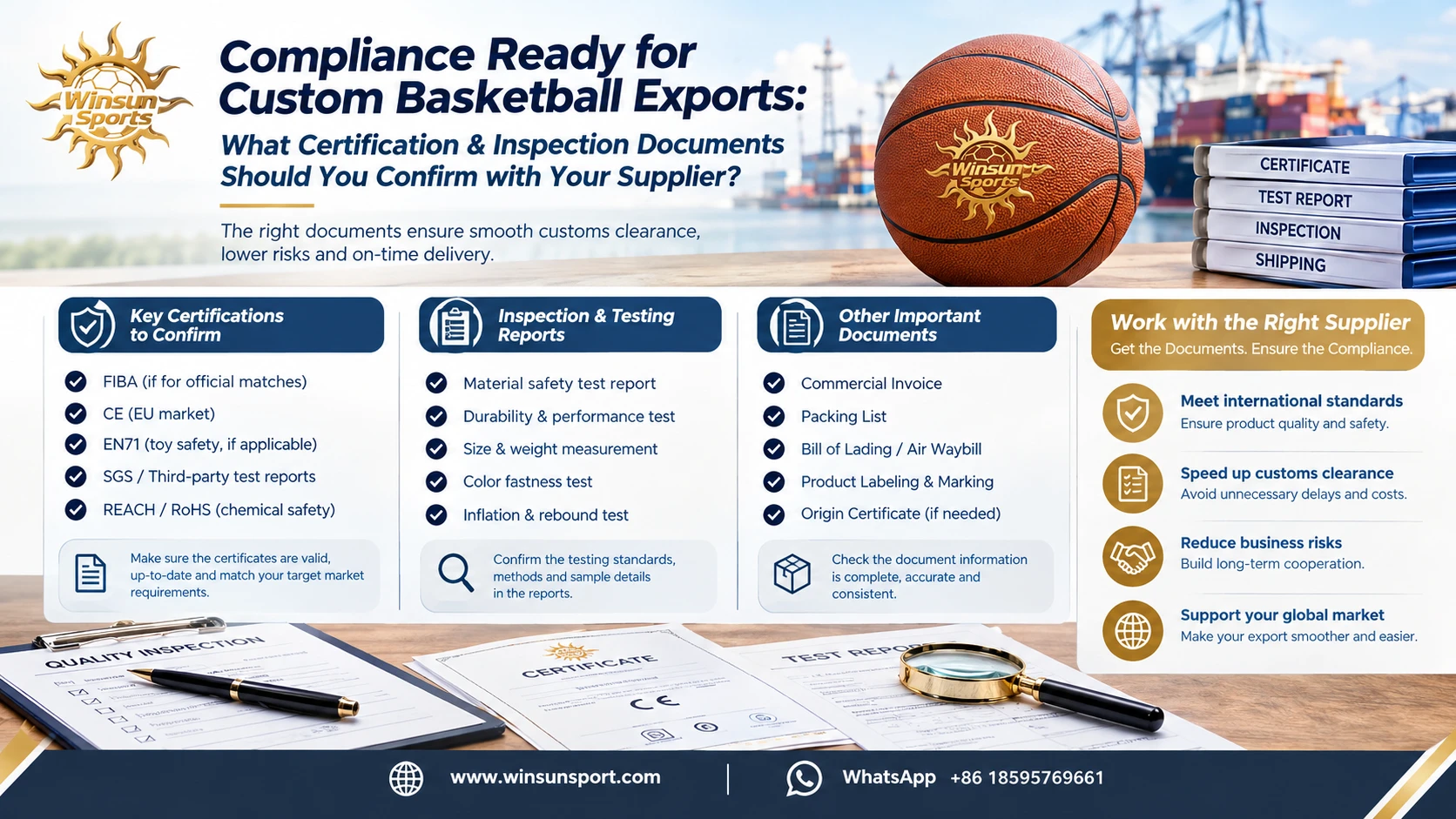
Compliance preparation for custom basketball export procurement: what certifications and acceptance documentation should be confirmed with suppliers

For compliance preparation in the export procurement of custom training basketballs, the core is not a single certificate, but a set of verifiable documentation chains. This article, from the four perspectives of responsibility boundaries, differences in target markets, acceptance verification methods, and scenario trade-offs, helps buyers determine what to prepare, what to confirm with suppliers, and which scenarios are not worth adding complexity to.

Read More →
Allecommerce
Custom Basketball Delivery Time Management: How to Avoid Delays Affecting Event Plans?
2026-09-01

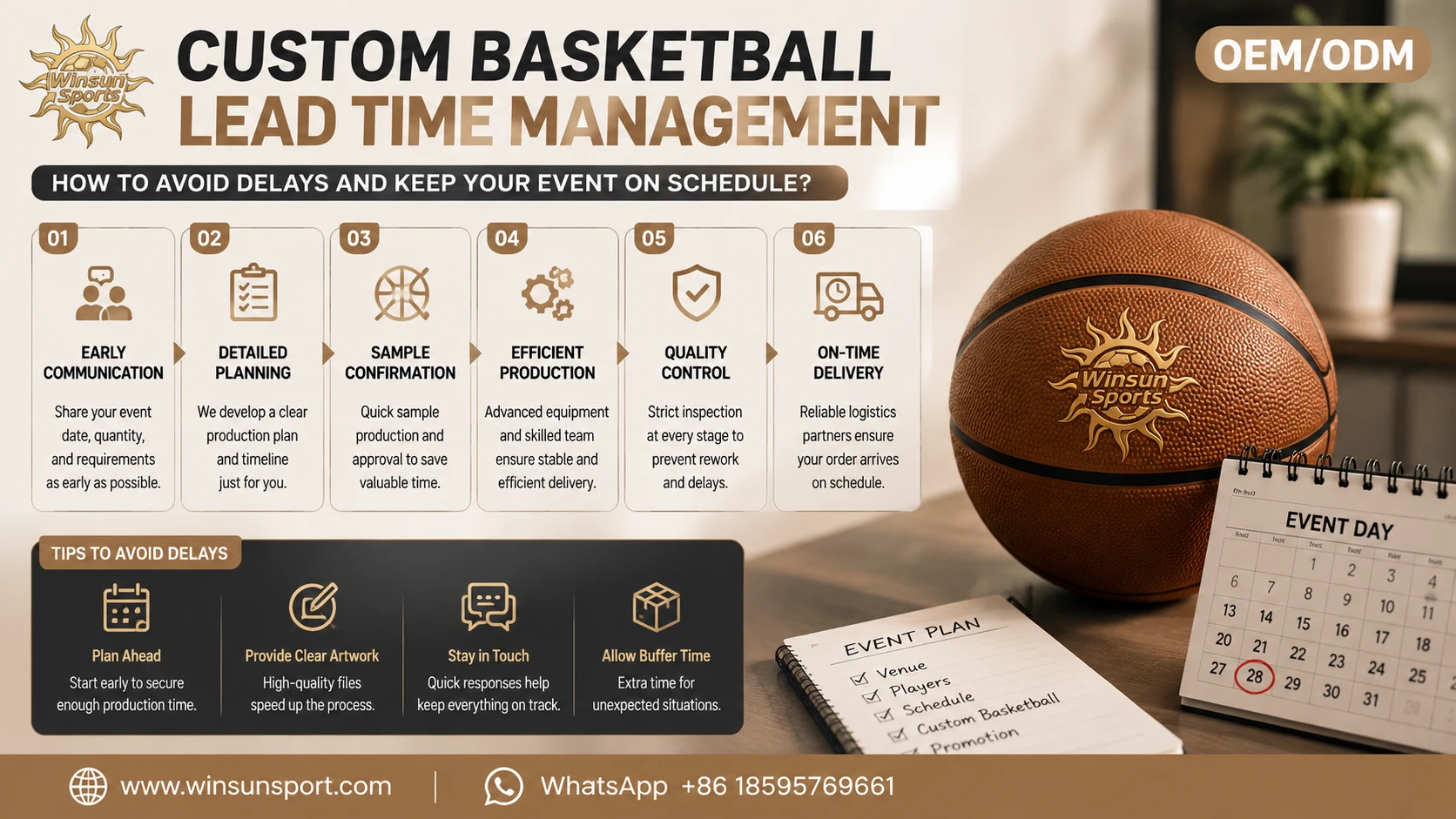
Custom Basketball Delivery Time Management: How to Avoid Delays Affecting Event Plans?

The lead time for custom basketballs is formed by three interconnected stages: design confirmation, material preparation, and production scheduling. This article breaks down the time-consumption logic and delay risk points of each stage, and provides four actions buyers can take to proactively shorten the lead time, as well as alternative solutions and decision boundaries when the lead time is tight, helping you accurately assess delivery time and avoid having no basketballs available before your event.
From sample to mass production: the sample confirmation and quality control process for custom basketballs
2026-08-31

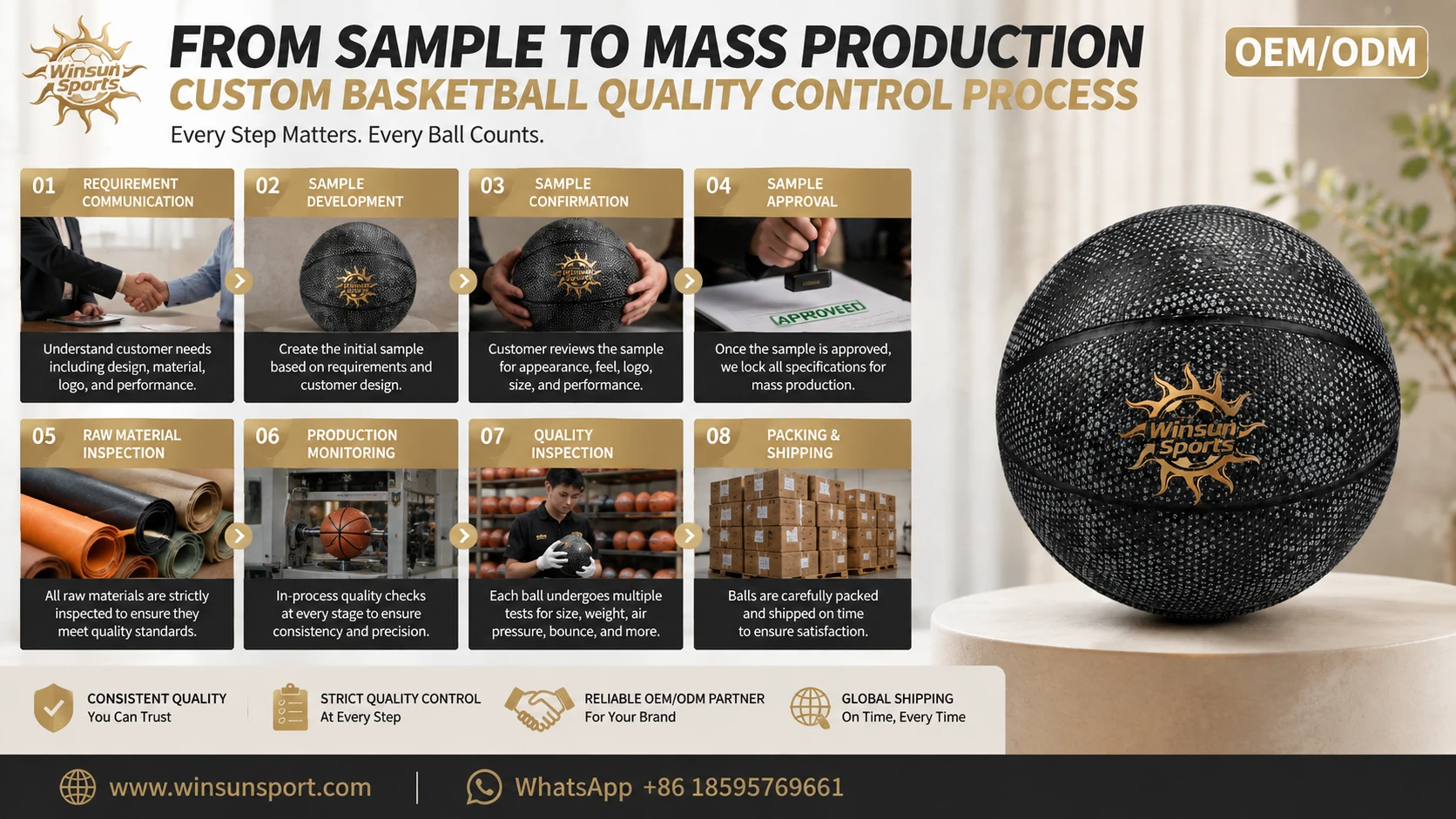
From sample to mass production: the sample confirmation and quality control process for custom basketballs

There is a gap between a custom basketball as designed and as delivered that can only be bridged by samples. This article breaks down the three key steps of sample approval—design draft confirmation, physical inspection, and sealed sample—and explains how factories use first-article inspection and in-process spot checks to ensure mass production matches the sample, helping you avoid the risk of batch rework.

Material selection for custom basketballs: rubber, PU, genuine leather—how to choose for different scenarios?
2026-08-28

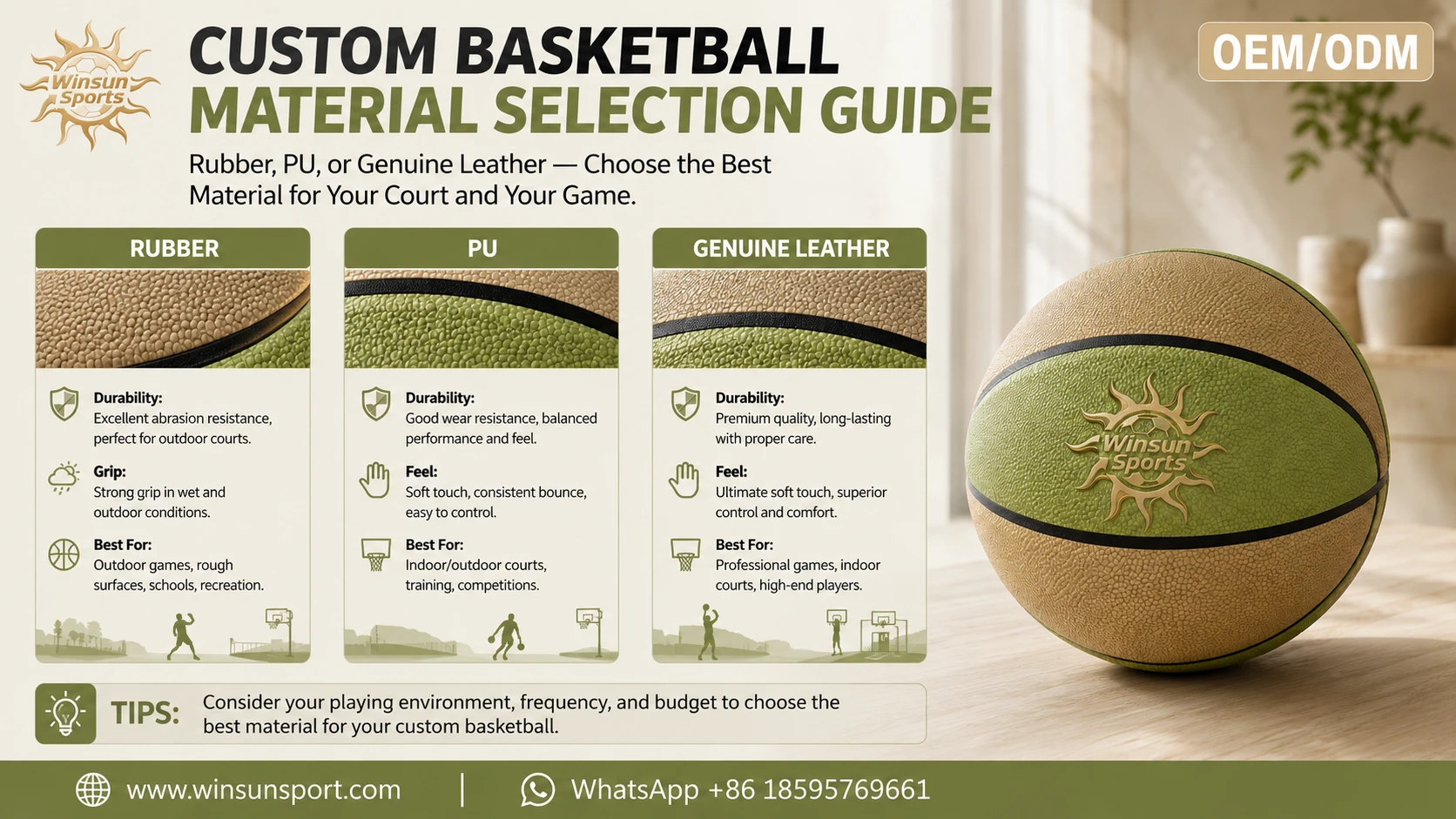
Material selection for custom basketballs: rubber, PU, genuine leather—how to choose for different scenarios?

The material of a custom basketball determines its feel, durability, and suitable playing scenarios. This article starts with the three mainstream materials—rubber, PU, and genuine leather—and combines factors such as playing surface, frequency, budget, and user group to help you clarify your selection logic. It also addresses key customization questions such as printing techniques and size matching.

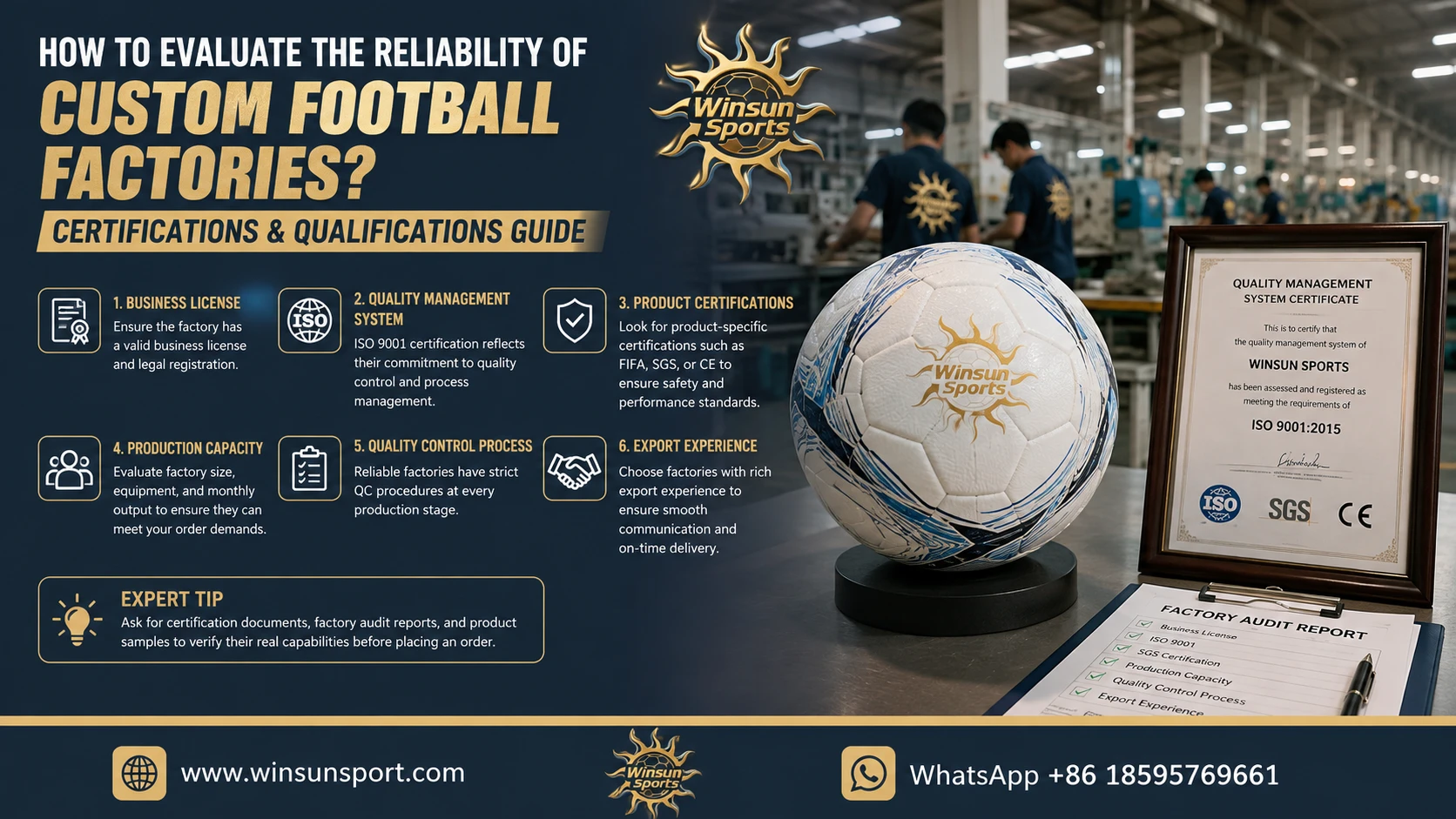
How to evaluate the reliability of a custom football factory? Certification and qualification guide
2026-08-27 ecommerce

How to evaluate the reliability of a custom football factory? Certification and qualification guide

When purchasing custom footballs, certification documents, factory audits, sample testing, and contract terms are the four key links that ensure quality and delivery. This article starts with the difference between factory-level certification and product-level testing, and, combined with the printing and durability characteristics of the black-base silver-star No. 5 PU custom football, provides an actionable checklist and decision-making logic to help procurement managers systematically evaluate factory capabilities and reduce risks in bulk purchasing.

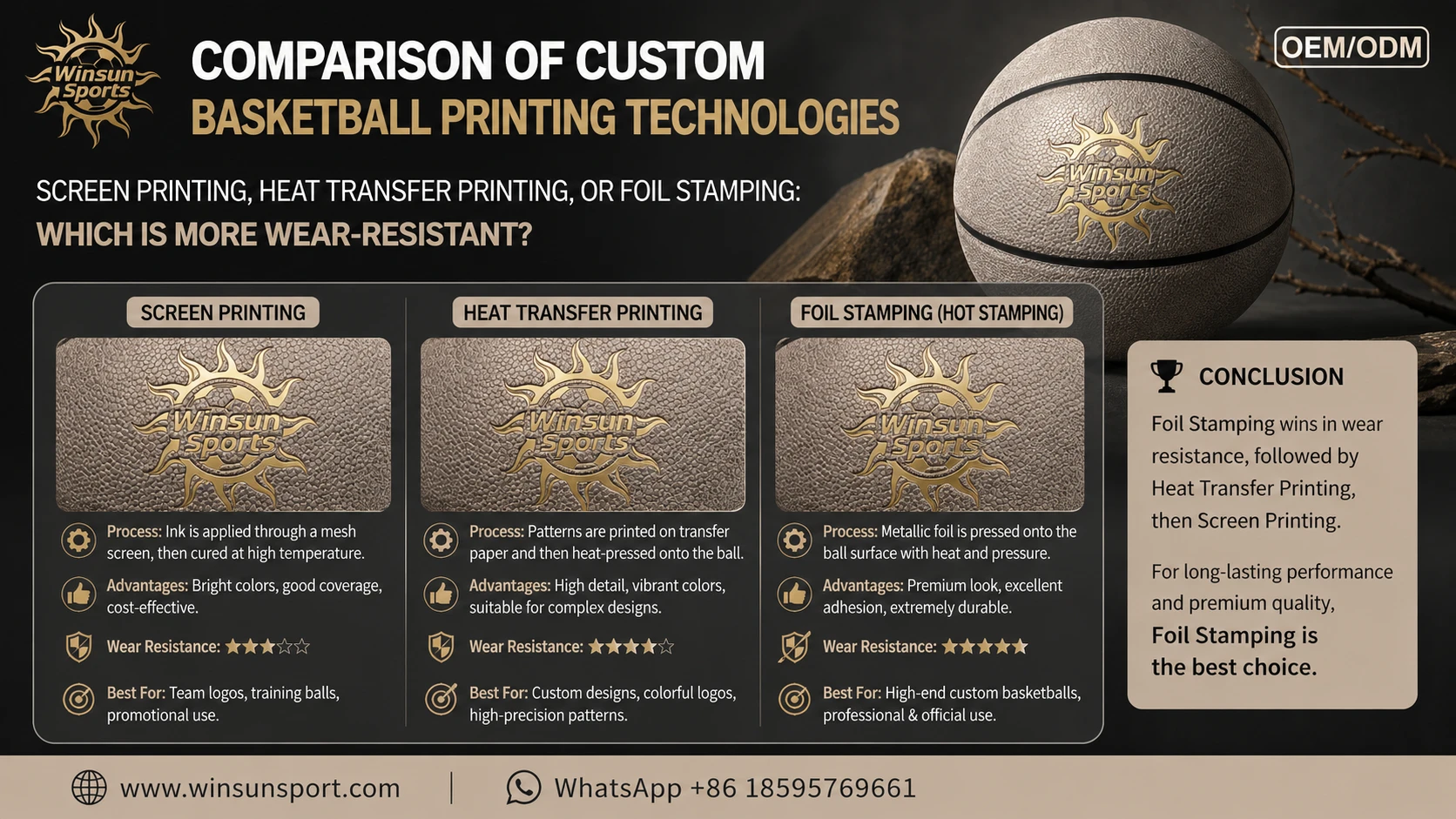
Comparison of custom printing techniques for basketballs: screen printing, heat transfer, and hot stamping—which one is more durable?
2026-08-26

Comparison of custom printing techniques for basketballs: screen printing, heat transfer, and hot stamping—which one is more durable?

The printing process used for custom basketballs directly affects the durability, feel, and visual effect of the pattern. This article compares three mainstream processes—screen printing, heat transfer printing, and hot stamping—from four dimensions: working principle, abrasion resistance, pattern expressiveness, and cost. It also provides selection recommendations based on different usage scenarios such as games, training, and gifts, helping you make the most suitable choice according to your actual needs.

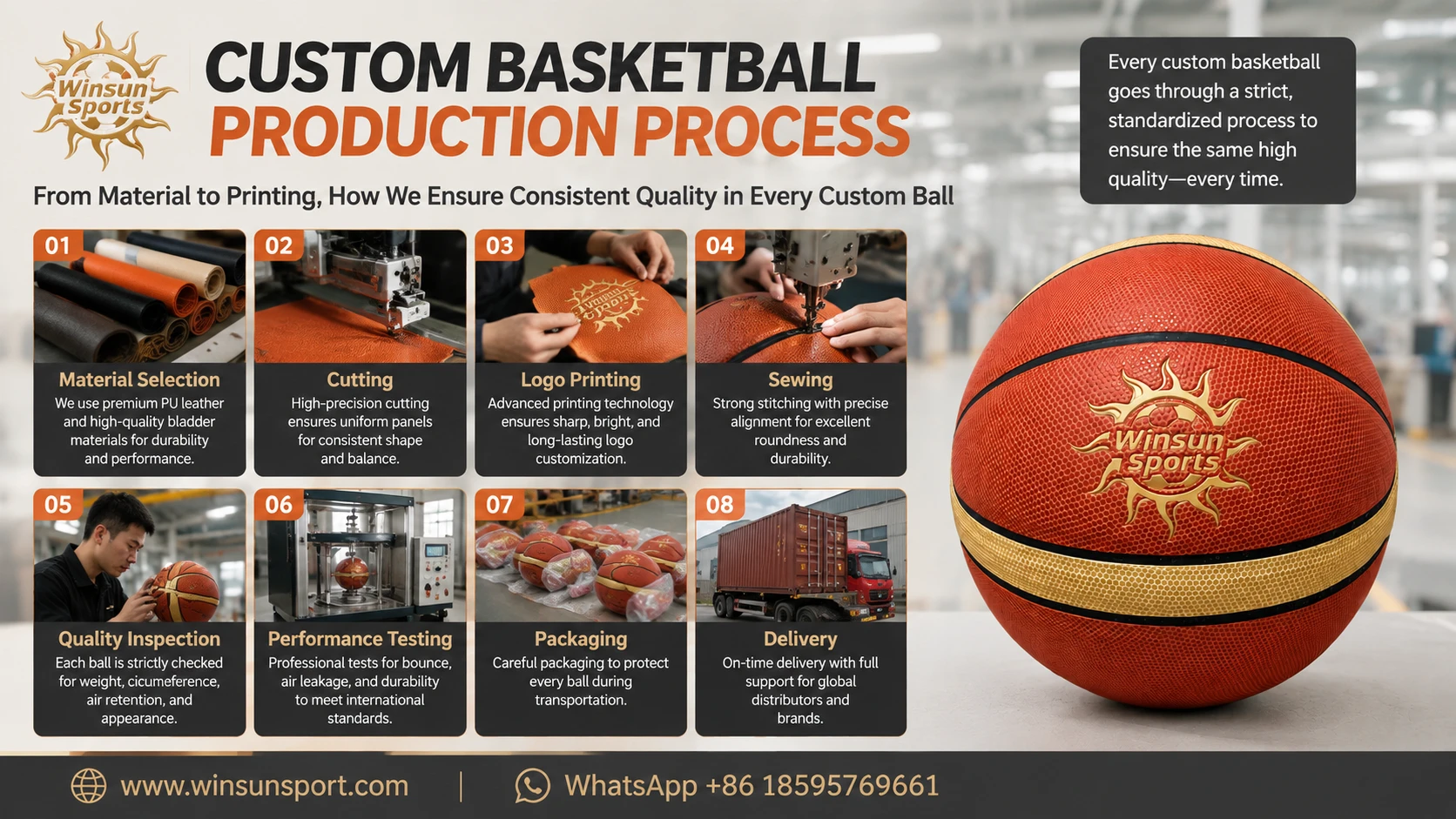
A complete breakdown of the custom basketball production process: from material selection to printing, how does the factory ensure consistent quality?
2026-08-25

A complete breakdown of the custom basketball production process: from material selection to printing, how does the factory ensure consistent quality?

This article provides an in-depth breakdown of the entire process of custom basketballs, from material selection and printing to molding and quality inspection. It focuses on analyzing the applicable boundaries of rubber, PU, and genuine leather materials, as well as screen printing, heat transfer, and hot stamping processes. It also offers key control points for sample confirmation and mass production quality inspection, helping buyers more scientifically evaluate a factory's quality control capabilities and reduce the risk of inconsistent quality in batch deliveries.

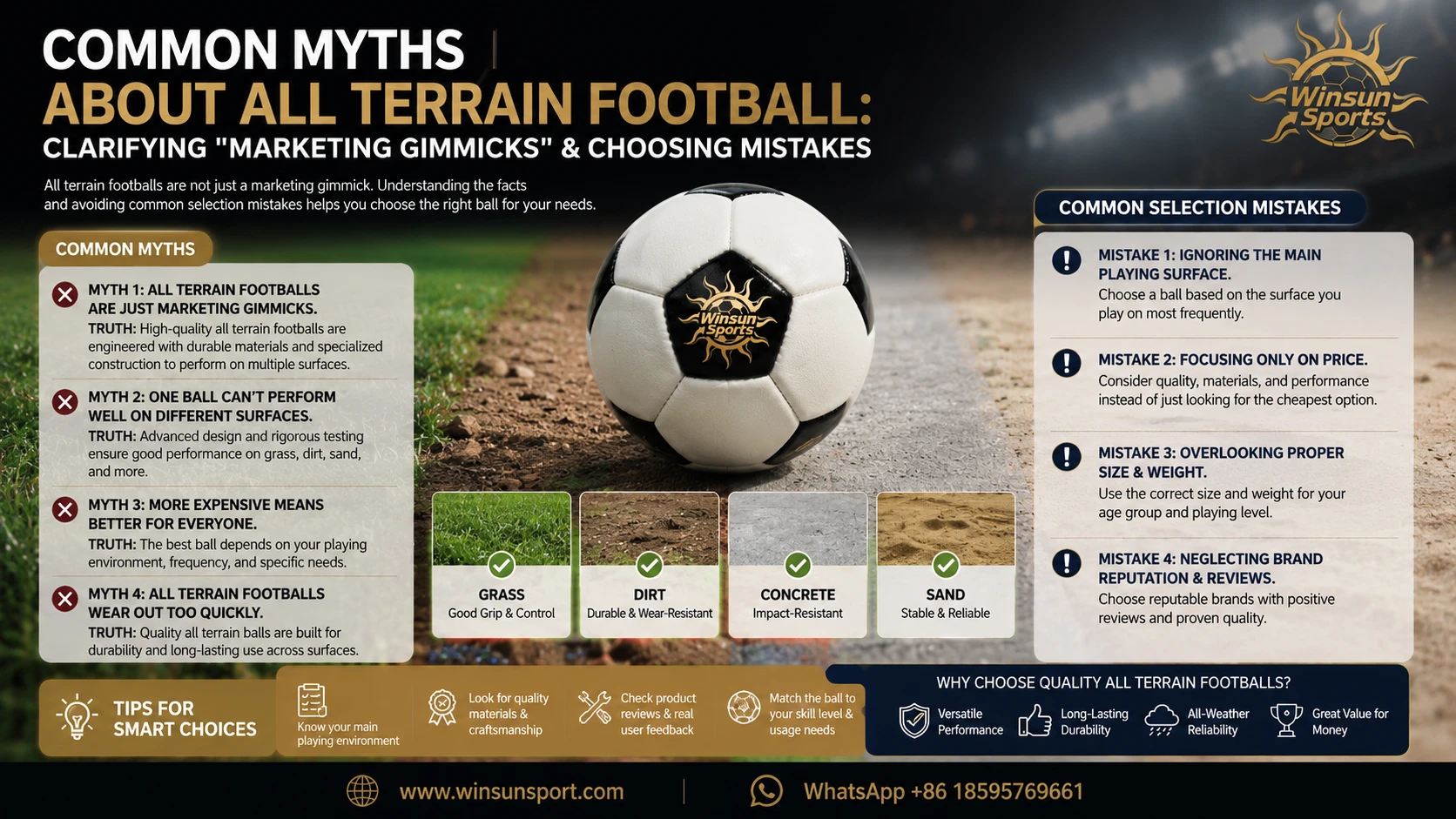
Common Misconceptions About All-Terrain Football: Clarifying the "Marketing Gimmick" Argument and Selection Misunderstandings
2026-08-24

Common Misconceptions About All-Terrain Football: Clarifying the "Marketing Gimmick" Argument and Selection Misunderstandings

All-terrain football is not a myth; it solves the problem of rapid wear on rough surfaces such as concrete and sandy fields by thickening the wear-resistant leather material and strengthening the airtightness of the inner bladder. This article breaks down its design logic, dispels three major purchasing misconceptions, and helps you match the most suitable specifications and configuration based on the field, age, and budget.

All-terrain football vs. dedicated-pitch football: which one is better suited to your use case?
2026-08-21

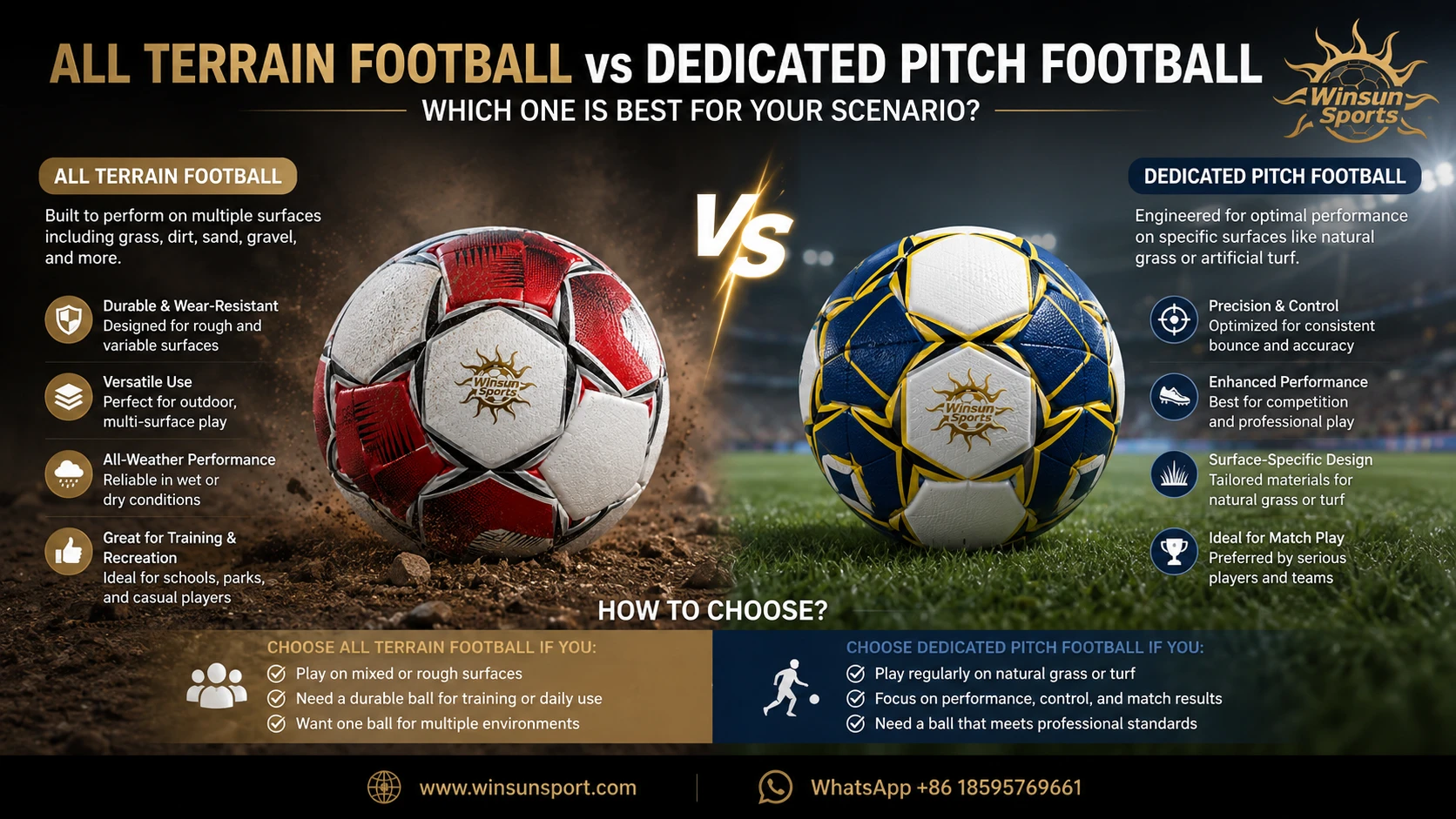
All-terrain football vs. dedicated-pitch football: which one is better suited to your use case?

This article compares the differences between all-terrain footballs and dedicated field footballs from five dimensions: design objectives, product structure, wear resistance, applicable scenarios, and long-term costs, helping different users make informed choices between multi-surface and fixed-field options. Whether you are a youth training coach, a school procurement officer, or an individual player, you can find selection logic that matches your own scenario here.

OEM Custom All-Terrain Soccer Ball: A Complete Process Guide from Selection to Delivery
2026-08-20

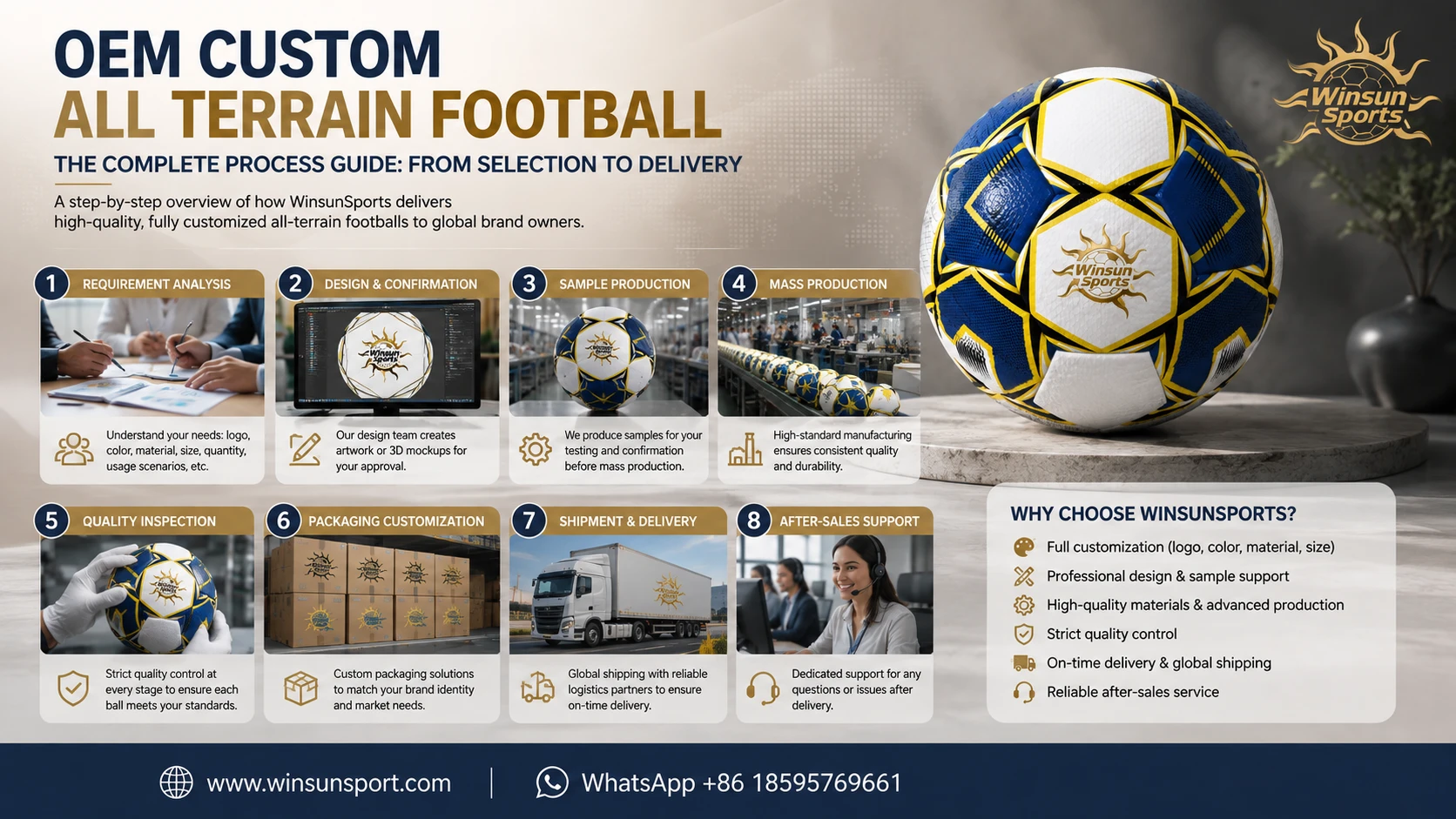
OEM Custom All-Terrain Soccer Ball: A Complete Process Guide from Selection to Delivery

This article provides a systematic selection framework for B2B customers planning to purchase custom all-terrain footballs. It starts from three core variables—playing surface, frequency of use, and age group—and breaks down the key control points throughout the entire OEM customization process, from requirement communication and sample confirmation to mass production quality inspection, helping buyers clarify their own requirement boundaries and avoid cost waste caused by selection errors.

InstagramFacebook