Blog

Find industry insights, practical guides, and curated opinions here.

Home BlogMiddle心

Blog

Blog

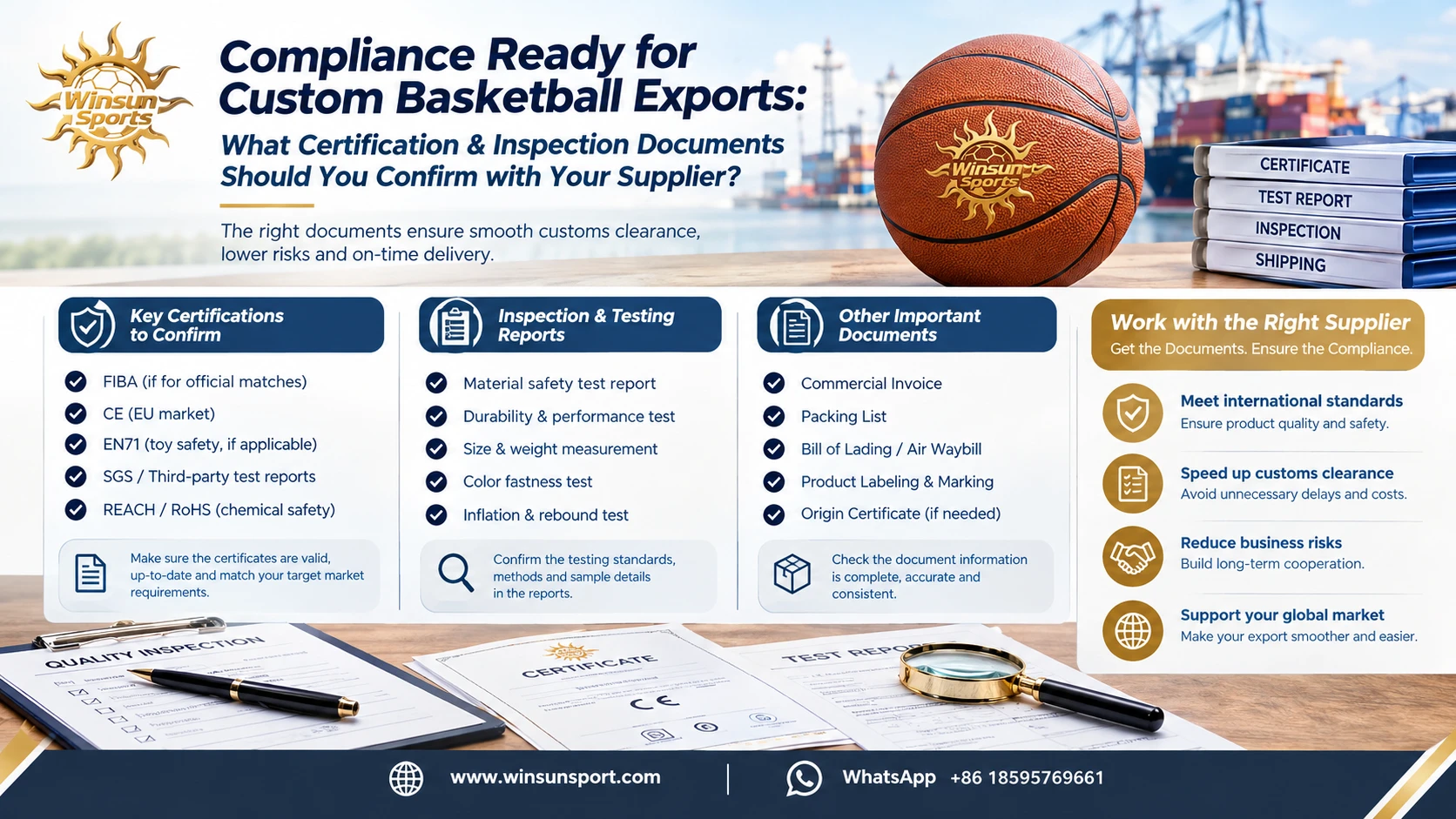
Compliance preparation for custom basketball export procurement: what certifications and acceptance documentation should be confirmed with suppliers
Popular

Compliance preparation for custom basketball export procurement: what certifications and acceptance documentation should be confirmed with suppliers

For compliance preparation in the export procurement of custom training basketballs, the core is not a single certificate, but a set of verifiable documentation chains. This article, from the four perspectives of responsibility boundaries, differences in target markets, acceptance verification methods, and scenario trade-offs, helps buyers determine what to prepare, what to confirm with suppliers, and which scenarios are not worth adding complexity to.
Read More →
Allecommerce
Compliance preparation for custom basketball export procurement: what certifications and acceptance documentation should be confirmed with suppliers
2026-10-03

Compliance preparation for custom basketball export procurement: what certifications and acceptance documentation should be confirmed with suppliers

For compliance preparation in the export procurement of custom training basketballs, the core is not a single certificate, but a set of verifiable documentation chains. This article, from the four perspectives of responsibility boundaries, differences in target markets, acceptance verification methods, and scenario trade-offs, helps buyers determine what to prepare, what to confirm with suppliers, and which scenarios are not worth adding complexity to.
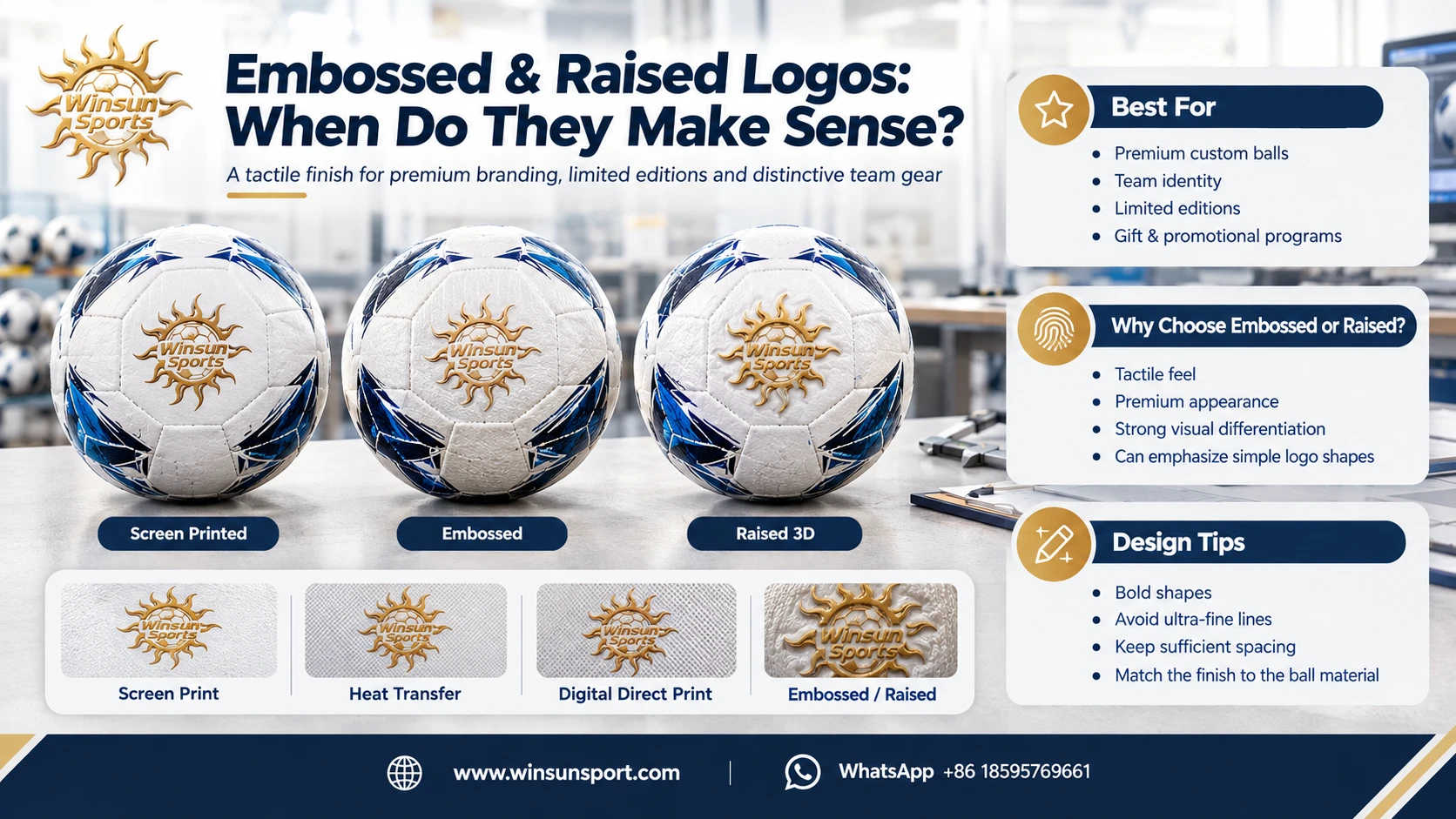
Beyond silk screen printing, heat transfer printing, and digital direct injection: what kind of customization needs are embossing and debossing logos suitable for?
2026-09-30

Beyond silk screen printing, heat transfer printing, and digital direct injection: what kind of customization needs are embossing and debossing logos suitable for?

Embossed and debossed logos do not rely on ink; instead, they use molds to make the ball surface itself form recesses or raised areas. The feel, durability logic, and visual presentation are clearly different from silk-screen printing and heat transfer printing. This article, from four perspectives—process principles, applicable scenarios, graphic simplicity requirements, and the proofing confirmation process—helps student teams, sports enthusiasts, professional practitioners, gift buyers, and collectors determine whether their logo and ball usage needs are suitable for the embossing process.

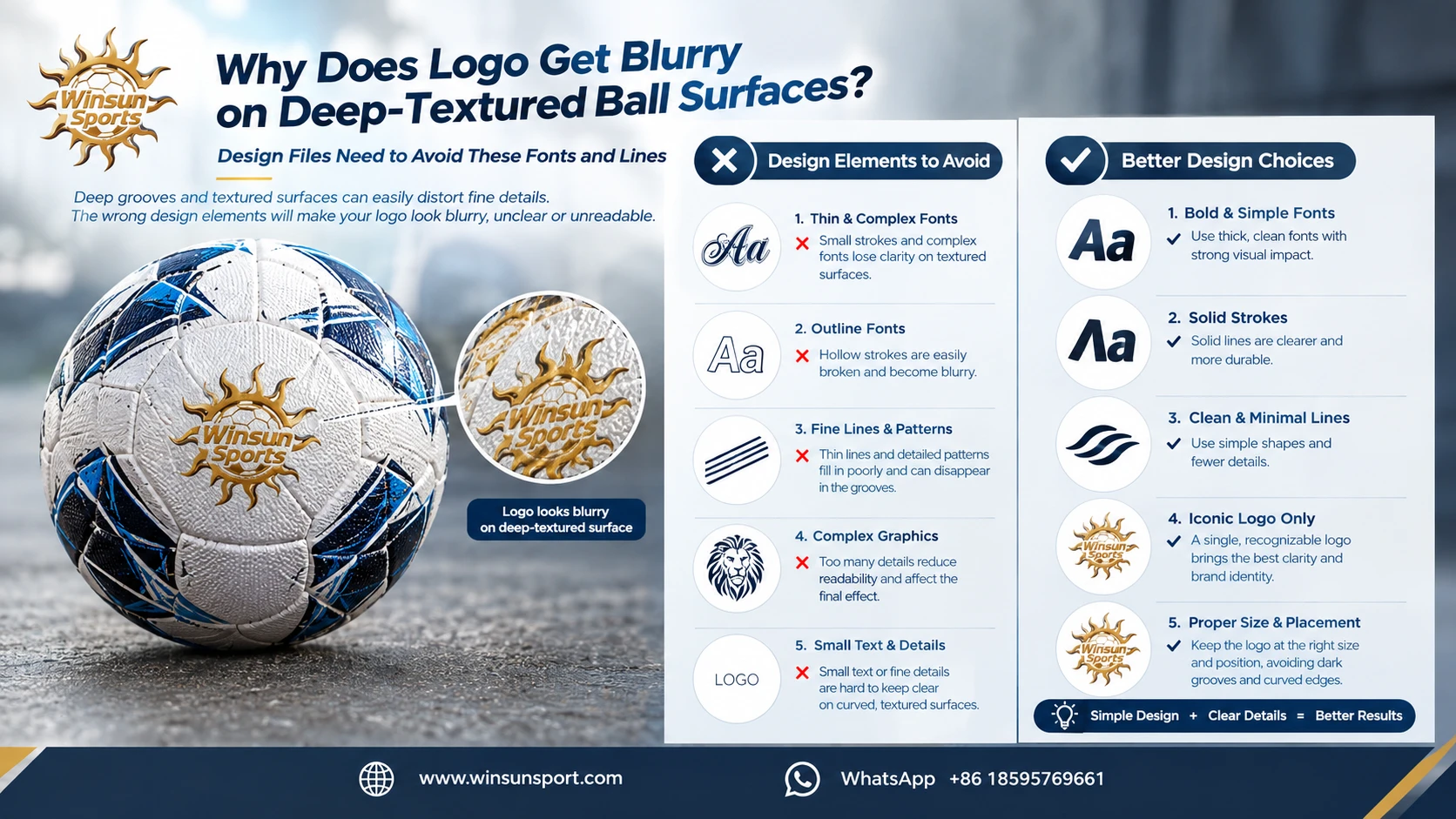
Why logos printed on deeply textured spherical surfaces easily become blurry: fonts and lines that design files need to avoid
2026-09-29

Why logos printed on deeply textured spherical surfaces easily become blurry: fonts and lines that design files need to avoid

The printing clarity of deep-grain training basketballs does not depend on whether the design artwork looks sharp on a screen, but on the physical relationship between the ball surface texture, ink adhesion, and line dimensions. Starting from the perspective of design files, this article explains which fonts and lines are prone to blurring on deep-grain ball surfaces, which logo scenarios are suitable for custom training basketballs, and how to keep rework risk under control before mass production through a self-check list and proofing confirmation.

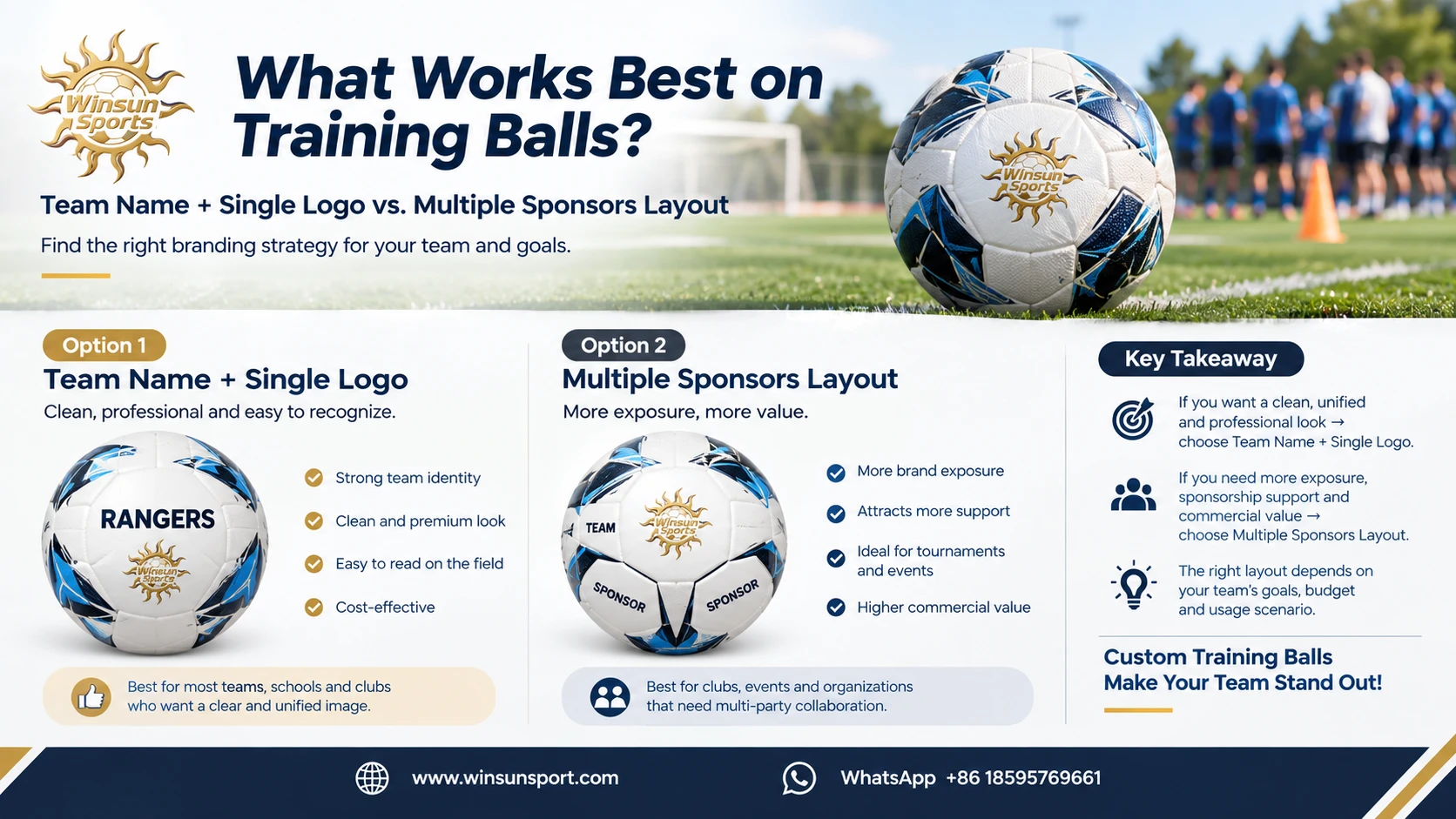
What is most effective to print on a training ball: the trade-off between a team name plus a single logo and a layout with multiple sponsors
2026-09-28

What is most effective to print on a training ball: the trade-off between a team name plus a single logo and a layout with multiple sponsors

The logo effect of custom training basketballs does not depend on how exquisite the design draft is, but on the physical load-bearing capacity of the deep-groove spherical surface. Starting from the spherical structure, this article analyzes the applicable boundaries of a single logo versus multi-sponsor layout, gives logo priorities according to three types of scenarios—teams, training camps, and brand promotions—and provides a readability self-check list before starting design as well as key information that needs to be confirmed with Winsunsport.

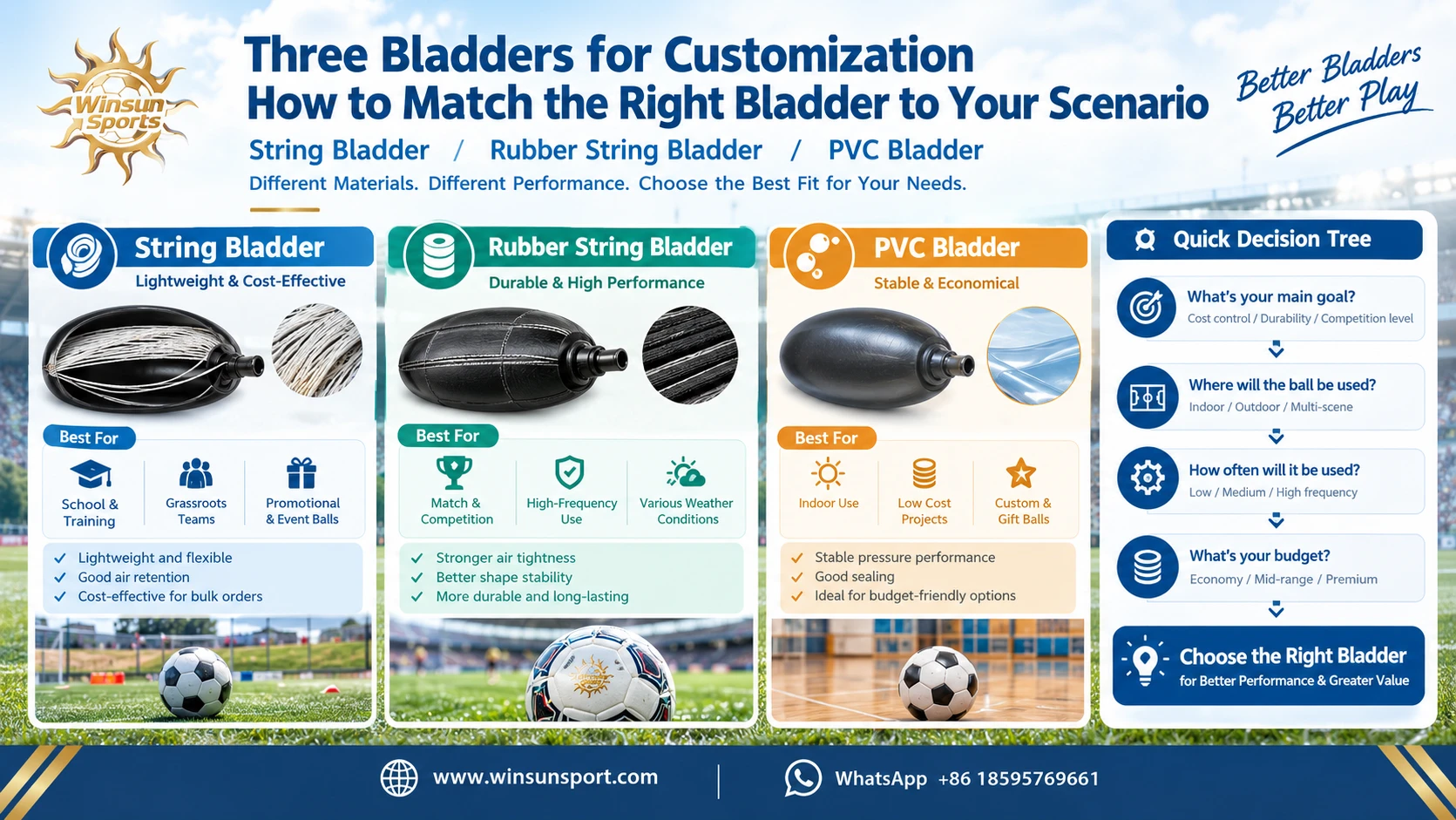
How to match the three types of liners in customized scenarios: a scenario-matching decision tree for wire liners, rubber wire liners, and PVC liners
2026-09-23

How to match the three types of liners in customized scenarios: a scenario-matching decision tree for wire liners, rubber wire liners, and PVC liners

When customizing soccer balls, the bladder type and leather thickness are the core configurations that determine feel, durability, and batch consistency. This article compares the working methods of thread bladders, rubber thread bladders, and PVC bladders, and provides configuration decision paths based on scenarios such as high-frequency training, official matches, rough fields, cross-border transportation, and gift commemoratives, helping buyers lock in a matching solution during the sampling stage and reducing waste caused by configuration mismatches.

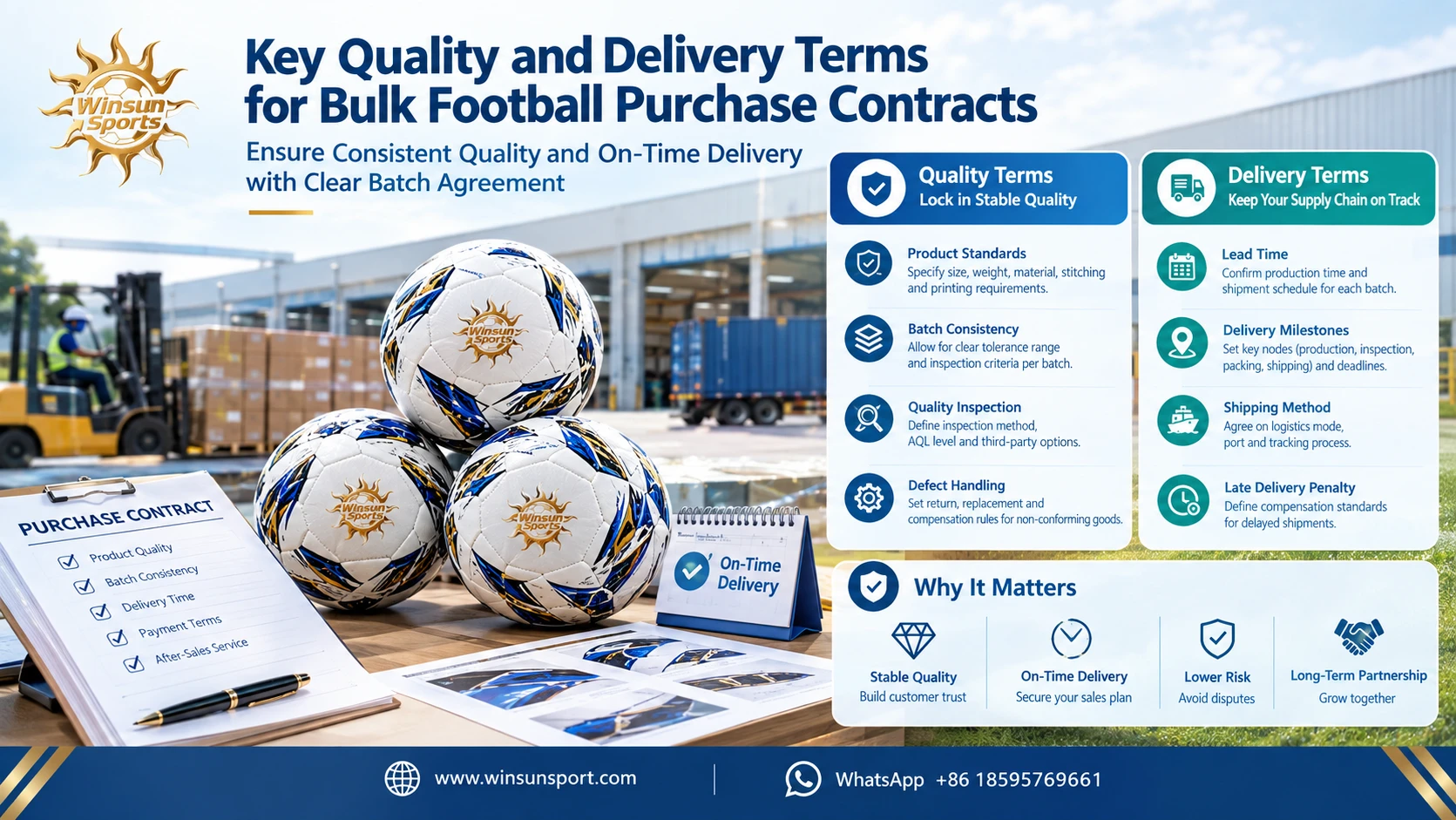
Bulk Purchase Football Contract and Batch Consistency Agreement: Key Quality and Delivery Points That Should Be Written into the Terms
2026-09-22

Bulk Purchase Football Contract and Batch Consistency Agreement: Key Quality and Delivery Points That Should Be Written into the Terms

When purchasing soccer balls in bulk, what the contract truly locks down is not the quantity and unit price, but a set of verifiable specification systems. This article, from the four dimensions of specification pre-setting, batch consistency, arrival acceptance inspection, and delivery scheduling in batches, sorts out how to transform key configurations such as leather thickness, bladder type, and air tightness into executable contract clauses, helping buyers establish a unified language of determination before signing, and reducing disputes upon arrival and deviations in repeat orders.

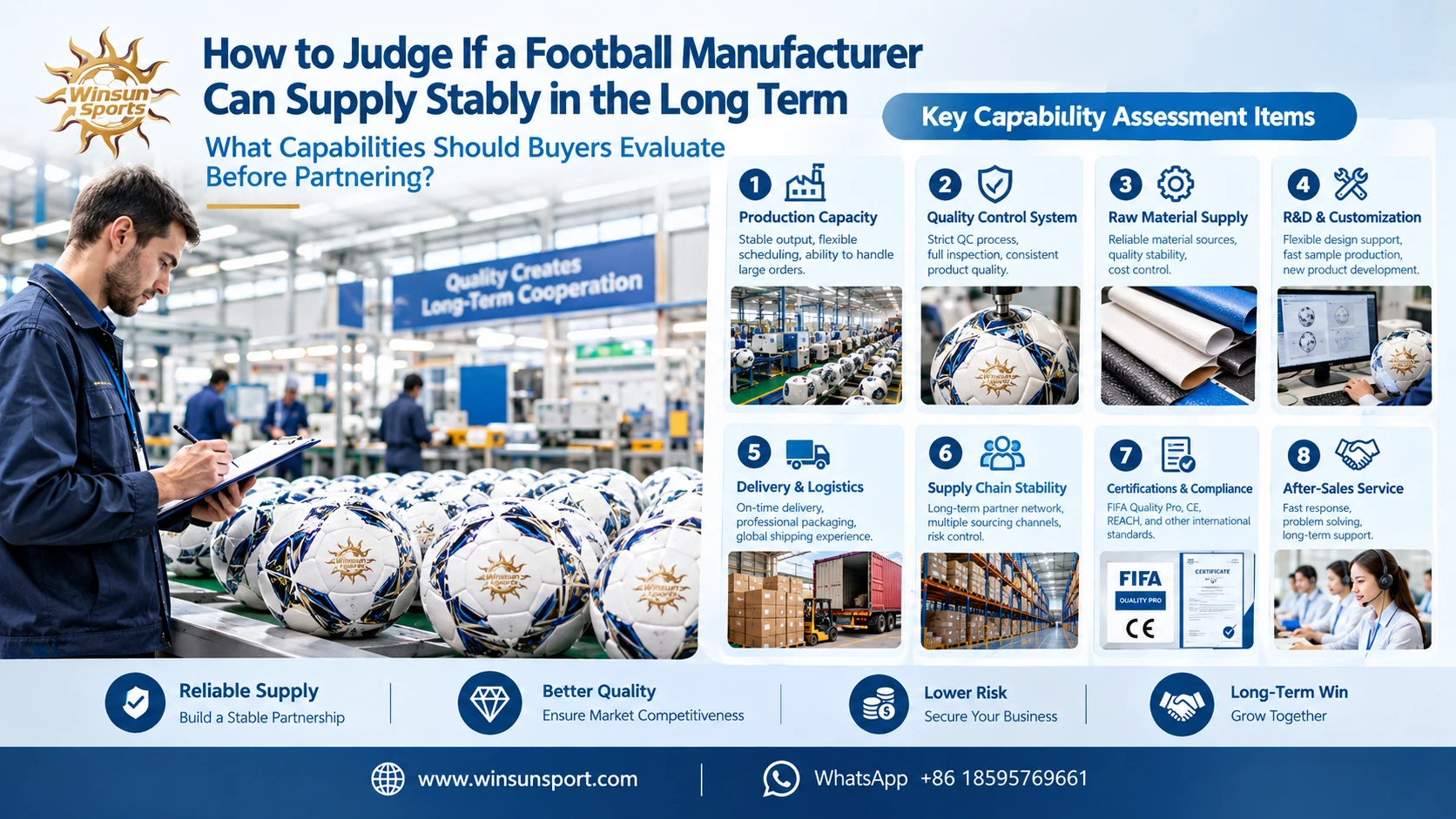
How to judge whether a football manufacturer can supply stably over the long term: which capability items should buyers evaluate
2026-09-20

How to judge whether a football manufacturer can supply stably over the long term: which capability items should buyers evaluate

Long-term stable supply does not equal large production capacity; rather, it means that after repeated orders of the same configuration, the leather feel, airtightness performance, softness or firmness of the foot feel, and delivery schedule rhythm all fall within an acceptable range. Starting from three verifiable signals—configuration locking, batch consistency, and delivery communication—this article provides an evaluation path for custom soccer balls from sampling and sealed samples to repeat order acceptance, helping buyers shift inquiries from price comparison to capability assessment.

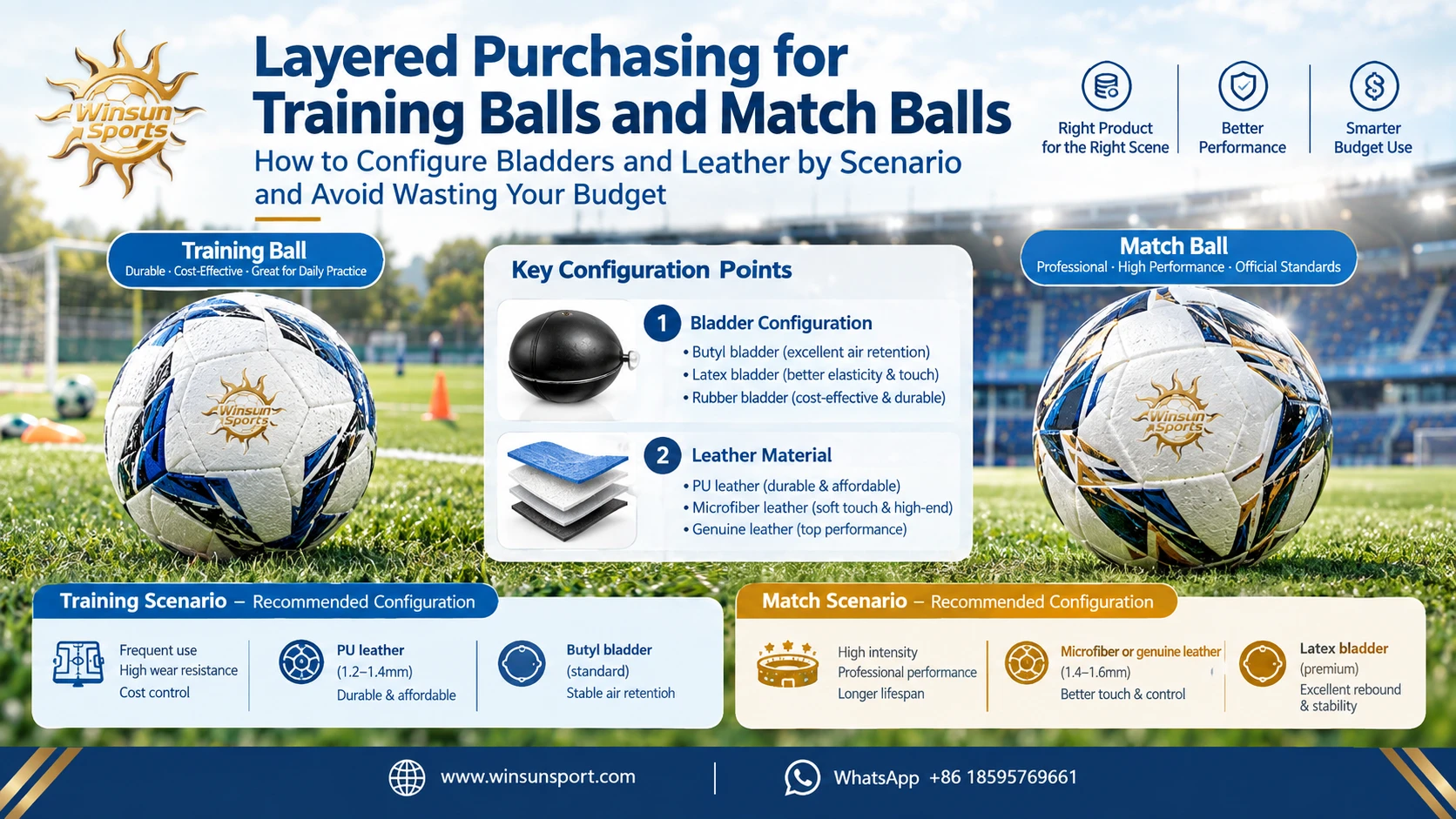
Layered procurement of training balls and match balls: how to configure bladders and leather materials by scenario without wasting budget
2026-09-18

Layered procurement of training balls and match balls: how to configure bladders and leather materials by scenario without wasting budget

Layered procurement is not about dividing balls into two tiers of good and bad, but rather splitting orders into a training tier and a match tier according to intensity of use: the training tier handles high-frequency wear and multi-person rotation, while the match tier is responsible for consistent feel across batches and stable air retention. This article, from the three perspectives of bladder type, leather thickness, and total cost over the usage cycle, explains what situations are worth layering, what situations a simple configuration is sufficient for, and what operating-condition information needs to be provided to the Winsunsport team to lock in the configuration.

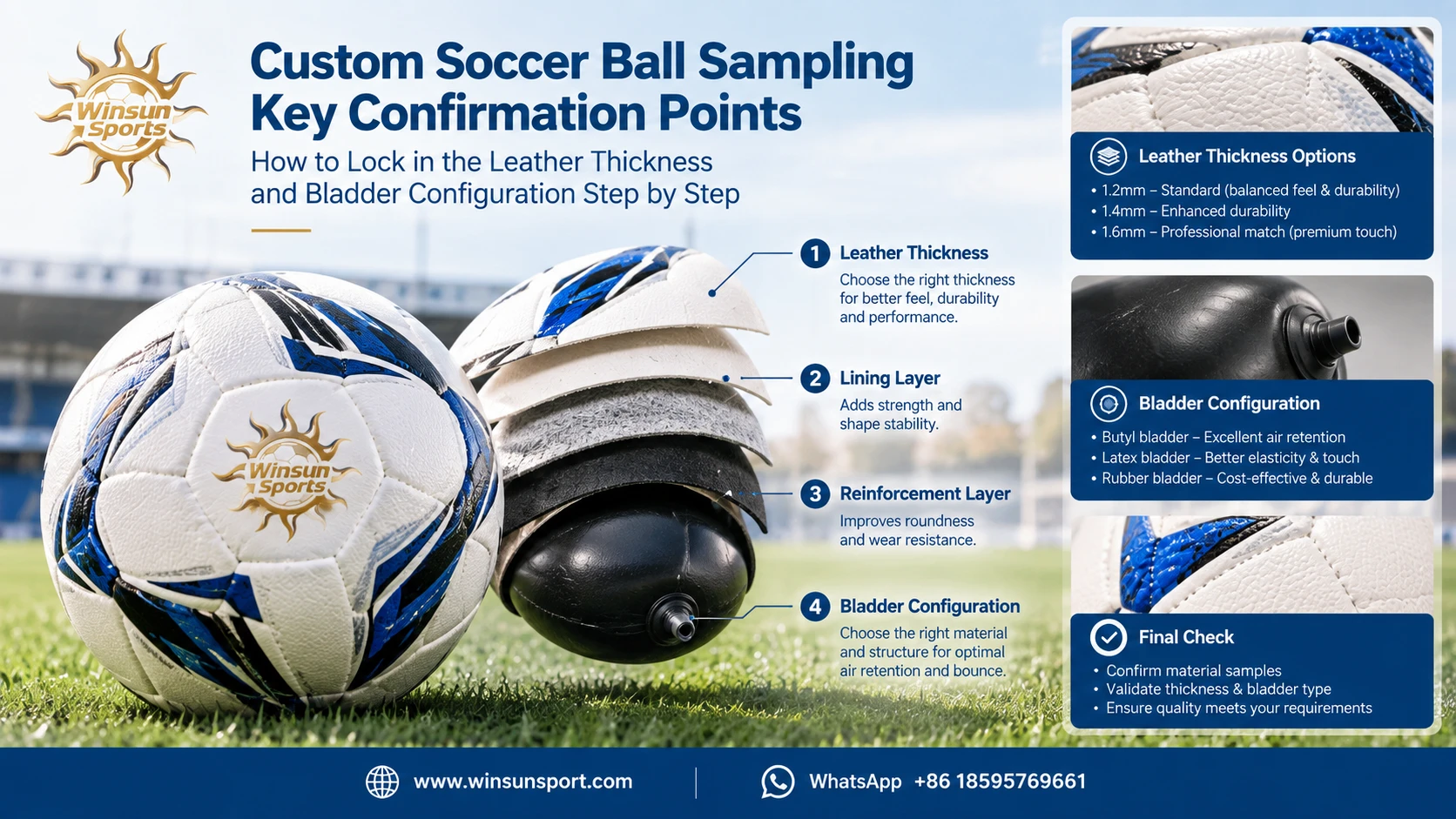
Key points for custom soccer ball sample confirmation: how to lock down leather thickness and bladder configuration item by item
2026-09-17

Key points for custom soccer ball sample confirmation: how to lock down leather thickness and bladder configuration item by item

Sampling for custom soccer balls is not about choosing colors and printing a logo, but about turning leather thickness, bladder type, and workmanship consistency into item-by-item verifiable specifications. This article moves customization risks forward to before signing the contract, helping buyers lock down key configurations during the sampling stage and avoid hand-feel drift, air retention decline, and batch inconsistency after mass production.

InstagramFacebook