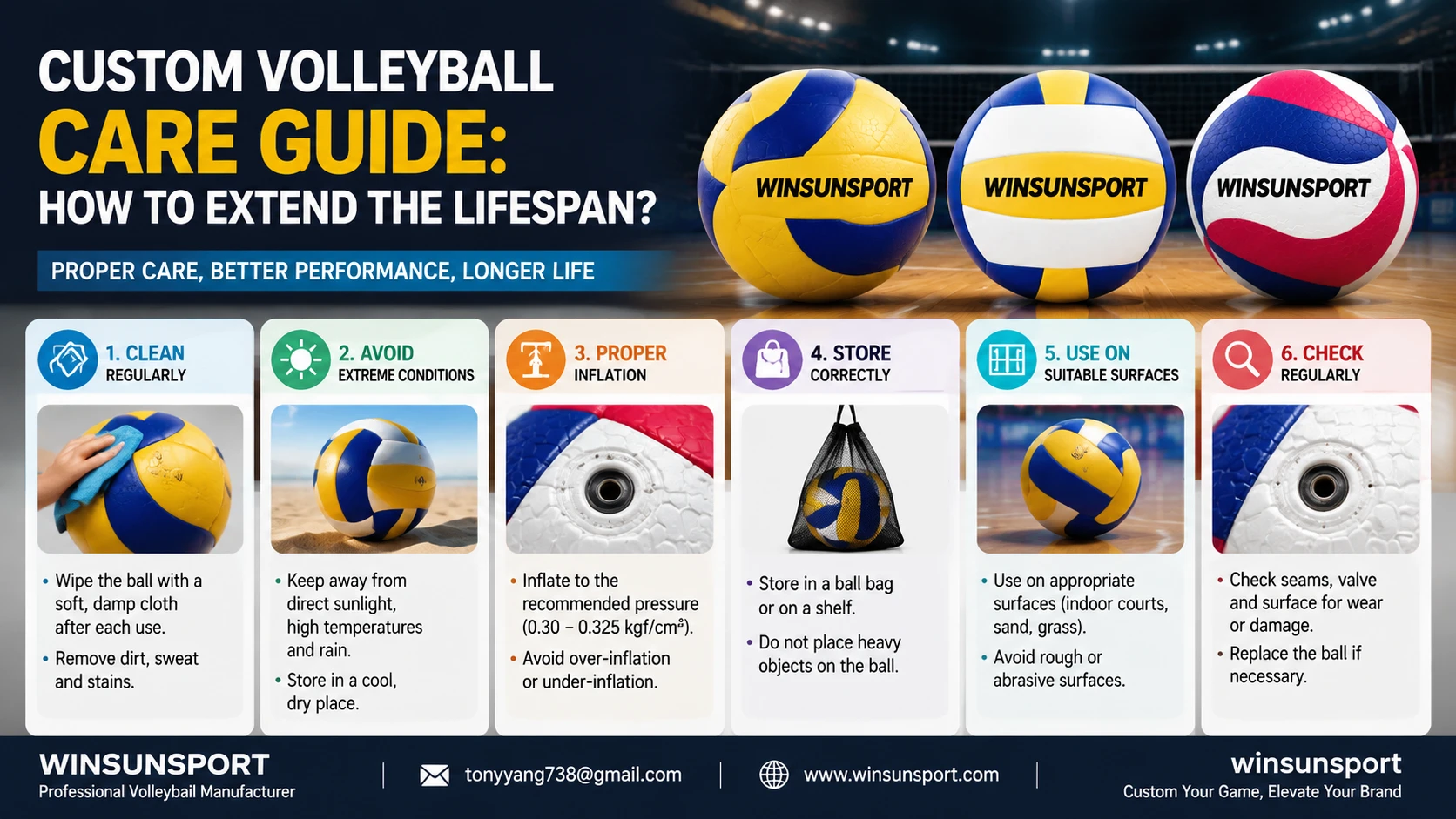
Why does a custom volleyball require special care?Materials and craftsmanship determine maintenance priorities.
The core difference between a custom volleyball and a standard volleyball lies in the personalized printed pattern added to the surface. This pattern is applied through processes such as screen printing or heat transfer. If maintained like a standard volleyball (e.g., direct washing, sun exposure, hard brushing), it may cause the pattern to peel, fall off, or discolor.
Differences in care between custom and standard volleyballs
- Cleaning method: Standard volleyballs can be wiped with a damp cloth or washed with water;custom volleyballs should be gently wiped with a slightly damp soft cloth to avoid water entering the edges of the pattern.
- Storage EnvironmentStandard volleyballs can be stored at room temperature in a dry place; custom volleyballs need to avoid high temperatures (>50°C) and direct sunlight to prevent pattern fading.
- Wear Risk: Surface wear on standard volleyballs does not affect appearance;On custom volleyballs, the patterned area wears first, affecting visual effect.
Maintenance Requirements for Different Materials (PU/PVC/Rubber)
- PU Material: Soft to the touch, suitable for competitions and teaching.Avoid cleaning with organic solvents. Wipe off sweat promptly with a dry cloth, otherwise it will become sticky and accelerate aging.
- PVC material: Wear-resistant, waterproof, with good pattern adhesion. Weather resistance is better than PU, but still needs protection from direct sunlight.Under normal use, the pattern remains intact for 1-2 years.
- Rubber material: Suitable for outdoor use, but patterns are prone to cracking due to rubber's elastic deformation. Pay attention to anti-aging measures.
Custom volleyball cleaning and storage: Key to preventing pattern detachment and material aging
The lifespan of the patterns and materials on custom volleyballs largely depends on how you clean and store them. Below, I will directly answer the three questions you care about.
Correct Cleaning Steps: From Surface Stains to Deep Cleaning
How to clean the patterns on custom volleyballs without them falling off?
The key lies in two points:Do not use solvents,Do not scrub the patterns vigorously。
- Daily stains (dust, dirt): Gently wipe the entire sphere with a slightly damp soft cloth (not dripping), then immediately absorb the moisture with a dry cloth.Avoid leaving water on the pattern for an extended period.
- Stubborn stains (oil, ink): Apply a small amount of mild soap (such as hand soap) to the stain, and use a soft-bristled toothbrushto gently clean in circular motionswithout scrubbing the pattern area back and forth forcefully.Immediately after cleaning, wipe off the soap residue with a damp cloth, then absorb moisture with a dry cloth.
- More strictly prohibited: Chemical solvents such as alcohol, gasoline, stain removers, and bleach—they will directly dissolve the pattern ink or damage the material surface.Also, do not use hard brushes or steel wool.
Key trade-off: The more frequent and vigorous the cleaning, the faster the pattern wears out. If the volleyball is only slightly dusty, wipe it off with a dry cloth; there is no need to wipe it wet every time.
Storage environment: optimal range of temperature, humidity, and pressure
Can the volleyball be left to sunbathe in the car?
No. The temperature inside a car can reach 60-70°C in summer, which directly leads to:
- Pattern peeling: High temperature softens the printing ink, causing it to separate from the ball surface.
- Material aging: PU/PVC materials become brittle and crack under high temperature, while rubber materials become sticky.
- Ball deformation: Internal air pressure expands due to heat, which may cause bulging or seam cracking.
How should a volleyball be stored when not used for a long time?
| Condition | Optimal Range | Why It Matters |
|---|---|---|
| Temperature | 10-25°C | Avoid high temperature accelerating aging or low temperature causing material hardening |
| Humidity | 40-60% | Excessive moisture can easily breed mold, while excessive dryness can cause the material to crack. |
| Air Pressure | Release 50%-70% of the air. | Completely deflating the balloon may cause deformation.Storing fully inflated increases seam pressure. |
| Location | Cool, dark place. | UV rays accelerate pattern fading and material degradation. |
Specific storage steps:
- Wipe the ball surface with a dry cloth to ensure it is completely dry.
- Use an inflation needle to release about half of the air (the ball should be slightly elastic when pressed).
- Place it in a breathable cloth bag or mesh bag (do not use a plastic bag, as it will trap moisture).
- Store it flat or hang it, and avoid heavy pressure.
Next confirmation step
If you are unsure about the ingredients of the cleaning agent, or if you need long-term storage (over 3 months), it is recommended to contact Winsunsport customer service, informing them of the specific material (PU/PVC/rubber) and printing process (screen printing/heat transfer) of your custom volleyball. The team will provide targeted maintenance advice.
Inflation and usage environment: daily checks to maintain competition-level performance
The air pressure of a volleyball directly affects its feel, bounce, and control stability. If the pressure is too high, the ball becomes hard, and catching it can easily injure fingers.If the pressure is too low, the ball becomes soft, and the trajectory of passes tends to be erratic. For custom volleyballs, improper air pressure can also accelerate surface wear or cause premature cracking in patterned areas.
How to Determine and Maintain Standard Air Pressure
Standard air pressure range: The air pressure for international competition balls is typically 0.30–0.325 kg/cm²(approximately 4.3–4.6 psi). In daily use, you can quickly judge by the following methods:
- Hand Feel MethodHold the ball with both hands and press the surface firmly with your thumbs. The depth of depression is 1–2 cm and rebounds quickly, the air pressure is basically normal.
- Height Test: Drop the ball from 1.8 meters free fall onto a flat hard ground. The rebound height is between 1.2 and 1.4 meters is considered qualified.
When inflating, use a dedicated needle and pump with a pressure gauge. Apply a small amount of water or saliva on the needle for lubrication before inflation to avoid damaging the valve.
Recommended maintenance frequency for different usage scenarios (competition/training/gift)
| Usage scenario | Inspection Frequency | Key Actions |
|---|---|---|
| Official Matches | Before each match | Confirm air pressure with a height test;Check the ball surface for bulges or scratches |
| Daily Training | Once a week | Quick hand-feel check;Wipe off surface sweat and dust after training |
| Gift/Collection | Once per quarter | Check if air pressure is lost due to temperature changes;Avoid direct sunlight and heavy pressure |
For training balls, a weekly hand-feel check is sufficient;For game balls, it is recommended to perform a height test before each use, as temperature changes may cause air pressure fluctuations and affect feel.
Which maintenance misconceptions can shorten the lifespan of custom volleyballs?And when should you contact the supplier
Custom volleyballs, like regular volleyballs, require proper usage and storage habits. The following three practices are most likely to cause premature damage to the ball; you can check your own usage against them.
Three most common mistakes that shorten lifespan
1. Playing with wet hands or on a wet court The surface of custom volleyballs (especially PU material) is afraid of water. Sweat, rain, or wet surfaces can cause the leather layer to blister, delaminate, and the pattern may crack prematurely due to moisture. Correct practice: dry your hands before playing, and wait until the court is completely dry after rain or mopping before using it.
2. Prolonged exposure to sunlight or being pressed under heavy objects Direct sunlight will age, harden, and fade the ball surface.Placing the ball under a backpack or equipment box will cause deformation, and it cannot return to its round shape. Correct practice: store in a cool, ventilated place; do not press or expose to sunlight.
3. Scrubbing with a hard brush or chemical cleaners To remove stains, some people use steel wool, alcohol, or laundry detergent to scrub the ball. This will directly damage the ball surface coating and printed patterns. Correct method: wipe gently with a damp soft cloth dipped in clean water, then let it air dry naturally.
Is volleyball peeling a quality issue or improper use?
PeelingUsually it is not a quality issue, but the result offriction or impact with sharp objectsresult. For example, playing on concrete floors, rough walls, or metal mesh frames can cause the ball cover to wear or tear. If you only use it on standard indoor courts and without the incorrect storage behaviors mentioned above, yet the ball peels extensively in a short time, then you should contact the supplier to confirm whether there is a problem with the material or craftsmanship.
Can the pattern be repaired if it falls off?
It cannot be repaired by yourself. The custom pattern is permanently cured at the factory through heat transfer or screen printing. Once it falls off or wears out, it cannot be restored with glue, stickers, or touch-up pens. If the pattern is only slightly lifted at the edges, you can continue using it.If a large area has fallen off and affects the appearance, it is recommended to purchase a new ball directly.
When should I contact Winsunsport for after-sales service or repurchase?
- After-sales consultation: If you strictly follow the maintenance recommendations but the ball develops non-human-induced bulging, seam cracking, or large-area peeling within 1-2 months, please take photos and contact Winsunsport customer service. We will verify the situation and provide a solution.
- Repeat Purchase Requirements: If the pattern is worn, the ball is aging, or you need to replenish the same ball for training/competition, contact the sales team directly and provide the original order number or design file to quickly replicate the custom solution.
- Maintenance Suggestions: If you are unsure whether your usage scenario (such as beach, outdoor hard court) is suitable for custom volleyballs, you can also consult customer service first. We will provide targeted advice based on your material and printing process.
Frequently Asked Questions
Q1: Can custom volleyballs be played on outdoor cement courts? They can be played, but it will significantly shorten the lifespan. Cement courts have high friction, causing faster wear on the ball surface and pattern.
It is recommended to use only on indoor wooden floors or plastic courts to maintain optimal condition.
Q2: The ball is a bit flat. Is it a quality issue? Not necessarily. First check if the air valve is leaking (apply soapy water to see bubbles). If the valve is intact but the ball is deformed, it may have been compressed during storage.
Just inflate to the standard pressure. If it continues to leak, contact after-sales service.
Q3: Can custom volleyballs be washed? Do not soak or machine wash. If the surface is dirty, wipe with a damp soft cloth dipped in clean water, then dry in the shade.
Washing can damage the inner bladder and adhesive layer.
Q4: The pattern has faded. Can it be reprinted? No. The pattern is applied via one-time heat transfer or screen printing, and cannot be partially reprinted.
If the fading is severe, we recommend purchasing a new ball and providing us with the original design file, so we can quickly reproduce it.
Q5: There are cracks on the ball surface. Can I still use it? If the cracks are not deep and there is no air leakage, it can still be used. However, the cracks will gradually enlarge, so it is advisable to prepare a replacement ball as soon as possible.
If cracks cause the inner bladder to be exposed or air to leak, please stop using it and contact customer service.
Learn More
If you have any questions about the materials or printing techniques of custom volleyballs, feel free to contact the Winsunsport team. We will provide personalized maintenance suggestions based on your usage scenario.
Related Products:Personalized Custom Volleyball