Enterprise Procurement Cost Calculator: Why Durable Soccer Balls Save More Money
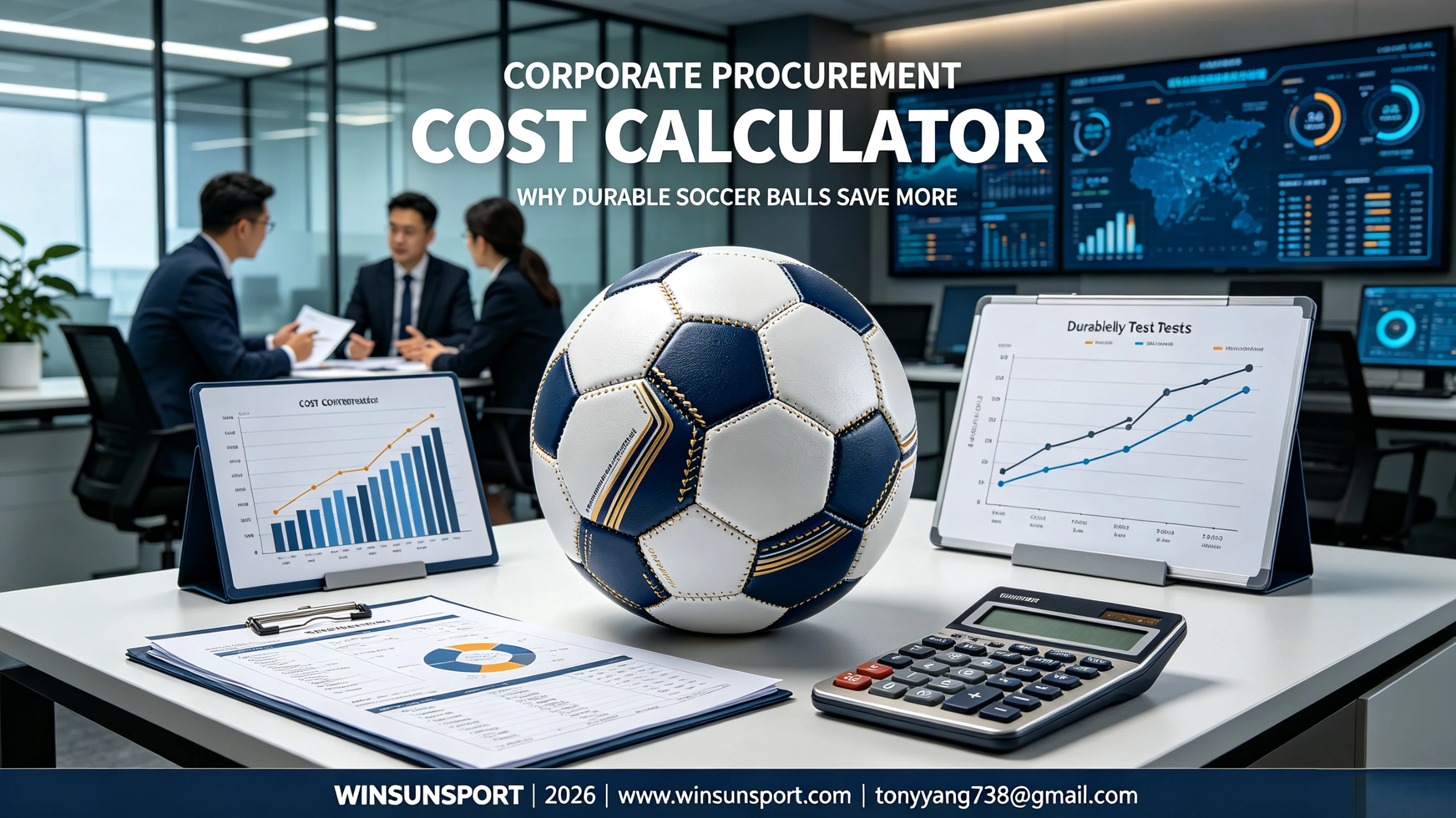
Calculating the Total Cost of a Soccer Ball: The Initial Price is Just the Beginning
When procuring soccer balls for corporate events, focusing solely on the initial sticker price may overlook the true cost components. The total cost of ownership for a soccer ball goes far beyond the amount paid at the time of purchase. Shifting from a 'unit price' mindset to a 'total cost' mindset is the first step toward making more economical decisions.
The Four Hidden Components of Total Cost of Ownership
Beyond the direct purchase price, the total cost of ownership for a soccer ball also includes the following potential expenses:
- Frequent Replacement Costs: The cost of re-procurement due to premature disposal caused by air leakage, seam splitting, or deformation of the ball.
- Maintenance Time CostIncludes the manpower and time spent repeatedly inflating balls in poor condition before or during an activity, or performing simple repairs.
- Activity Interruption CostIf the ball is damaged mid-activity, it causes training or matches to pause, affecting the smoothness and experience of the event.
- Management and Coordination CostThe series of management efforts consumed in handling damage, replacement matters, and communicating with suppliers about returns or exchanges.
Why Do "Cheap" Footballs Have Higher Hidden Costs?
Footballs with a lower initial price often compromise on key durability indicators. For example, insufficient leather wear resistance or poor bladder air tightness can significantly shorten the ball's lifespan. This means that within the same usage period, you will incur higher replacement costs and management effort, and the cumulative total cost may exceed that of a soccer ball with a higher initial price but stable performance and durability.
As mentioned in the product information, 'wear-resistant and durable' and 'excellent air tightness' are key to reducing these hidden costs from the design source.
How durability specifically reduces long-term expenses: Taking the Soft Touch soccer ball as an example
Procurement cost includes more than just the initial price. The durability of a soccer ball directly determines its replacement frequency and maintenance costs, thereby affecting the long-term total expenditure. The Winsunsport Soft Touch soccer ball, with its wear-resistant leather and various bladder options, is designed to extend its lifespan, thereby reducing your long-term usage costs.
Wear-resistant leather: How to reduce replacement frequency from the source
This soccer ball uses "wear-resistant and durable" leather, whose properties are designed to resist the friction and impact from turf or plastic pitches during daily training or matches. For the user, this means the ball's surface is less likely to quickly pill, crack, or deform under regular use. The leather thickness is a customizable option, but the "wear-resistant" characteristic itself helps reduce the need for whole-ball replacement due to cosmetic damage or degraded feel, thereby lowering procurement frequency.
Bladder Selection: How Airtightness and Elasticity Affect Lifespan
The durability cycle of a soccer ball also depends on its bladder. Soft Touch soccer balls offer choices such as butyl bladder, rubber butyl bladder, and PVC bladder, which differ in airtightness retention and elastic stability, thereby affecting the speed of performance degradation.
- Butyl Bladder and Rubber Butyl Bladder: are generally considered to perform more stably in terms of airtightness, leaking air more slowly, which can reduce the frequency of inflation maintenance.This helps the soccer ball maintain a "moderate elasticity" state for a longer period.
- PVC Bladder: It may have characteristics in terms of cost or weight, but its long-term air retention and aging resistance performance often differ from the previous two.
Therefore, choosing different bladders is essentially a trade-off betweenlong-term air retention, elastic feel, and maintenance frequency.Trade-offs between the two. For scenarios where reducing maintenance and extending the single ball's usage cycle are desired, opting for a bladder solution with more durable air retention performance helps reduce long-term expenses.
Is your usage scenario suitable?
- More likely to save long-term costsIf your usage is of moderate intensity and you wish to reduce maintenance and replacement frequency (e.g., regular team activities, daily fitness).
- Further confirmation is neededIf used for extremely high-intensity professional training or special outdoor storage, it is recommended to consult Winsunsport to confirm whether its durability limits match.
For your enterprise scenario, should you invest in a durable ball or choose a cheap alternative?
When procuring soccer balls for an enterprise, the core decision lies in balancing initial cost with long-term usage value. Choosing a durable product (such as Soft Touch) or a cheap alternative primarily depends on your specific usage scenario.
Three typical scenarios where a durable ball is recommended
- High-frequency, long-term use by multiple people: For example, weekly team-building activities, corporate leagues, or regular training sessions.Under high usage frequency, the wear-resistant leather and solid construction of a durable soccer ball can significantly reduce damage, avoiding the extra procurement costs and activity interruption risks associated with frequent replacements.
- Focus on activity experience and brand image: When the soccer ball is used for external friendly matches, client events, or as a corporate gift, its moderate elasticity and comfortable foot feel can enhance the participant experience, while its durable quality ensures long-term display or use, maintaining the brand image.
- Need for stable maintenance expectations: For enterprises with dedicated personnel or fixed plans to manage activity supplies, a durable ball with good air retention (such as one using a rubber bladder) can reduce the burden of frequent inflation or maintenance, making management more worry-free.
Boundary conditions where a cheap ball might suffice
Cheap alternatives should only be considered in the following specific scenarios:
- Extremely low frequency or one-time use: For example, a fun sports day held only once a year, where the ball is treated as a prop after the event.
- As a pure consumable: The budget is extremely limited, and it is known that the ball will wear out quickly (e.g., for children's short-duration entertainment activities).
- Non-functional use: The soccer ball is only used as a decorative display or photo prop and will not withstand any kicking.
Make a quick judgment based on your actual needs
Please confirm the following core questions to match the solution:
- Frequency and Intensity of UseHow many times per week?Is it for formal matches or casual passing?
- Core PurposeIs it for competitive training, team welfare, event props, or gift promotion?
- Expected LifespanDo you expect this batch of balls to last for a quarter, a year, or longer?
ConclusionFor most regular corporate activities (such as fitness and training), the total cost of investing in a durable soccer ball is often lower. Its reduced replacement frequency and management costs typically 'pay for themselves' over the long term. For your specific scenario, you can share your requirements with us to receive tailored configuration recommendations.
Frequently Asked Questions
The 'total cost thinking' sounds complicated. How can I calculate it simply?
A simple estimation method is: estimate the expected lifespan of this ball (e.g., six months or a year), then consider that during this period, purchasing a cheaper ball might require 2-3 replacements, while a durable ball might only need 1.When you factor in the costs of multiple purchases, potential additional maintenance time, and management effort, the total cost often becomes clear.If you can inform us of the usage frequency, we can also help you with a preliminary calculation.
Among the bladder types you mentioned—wound, rubber, and PVC—which one should you choose?
The choice mainly depends on your priority for 'maintenance-free' operation.If you want the soccer ball to maintain air pressure for a long time and reduce the hassle of inflation, then the bladder with typically better air retention,such as a wound bladder or a rubber wound bladder,is the more preferred choice. If you are particularly sensitive to the initial cost, or if the usage intensity is very low,PVC Bladderthis can also be considered. The most accurate advice is to base it on your usage scenario and tolerance for maintenance frequency.
In what situations is buying a cheap soccer ball sufficient?
A cheap ball may be sufficient when any of the following conditions are met: 1. Extremely low frequency of use, such as once a year;2. As a disposable item, used and then discarded;3. Not used for playing at all, only for decoration or photography.However, as long as the soccer ball needs to be used normally for play, especially in multi-person or high-frequency scenarios, the long-term value brought by durability will become prominent.
Learn More
The core of soccer ball procurement decisions lies in matching your actual needs.If you are purchasing soccer balls for a team or corporate event, please let us know the specific type of activity, frequency of use, and your expectations. We can provide tailored recommendations on specifications, inner bladders, and configurations.
Related Products:Soft Touch Recreational Soccer Ball